Understanding Brand Value in Product Creation
Last updated: August 5, 2025
Overview
During product creation in First Bite you have the option of entering your Brand Value.
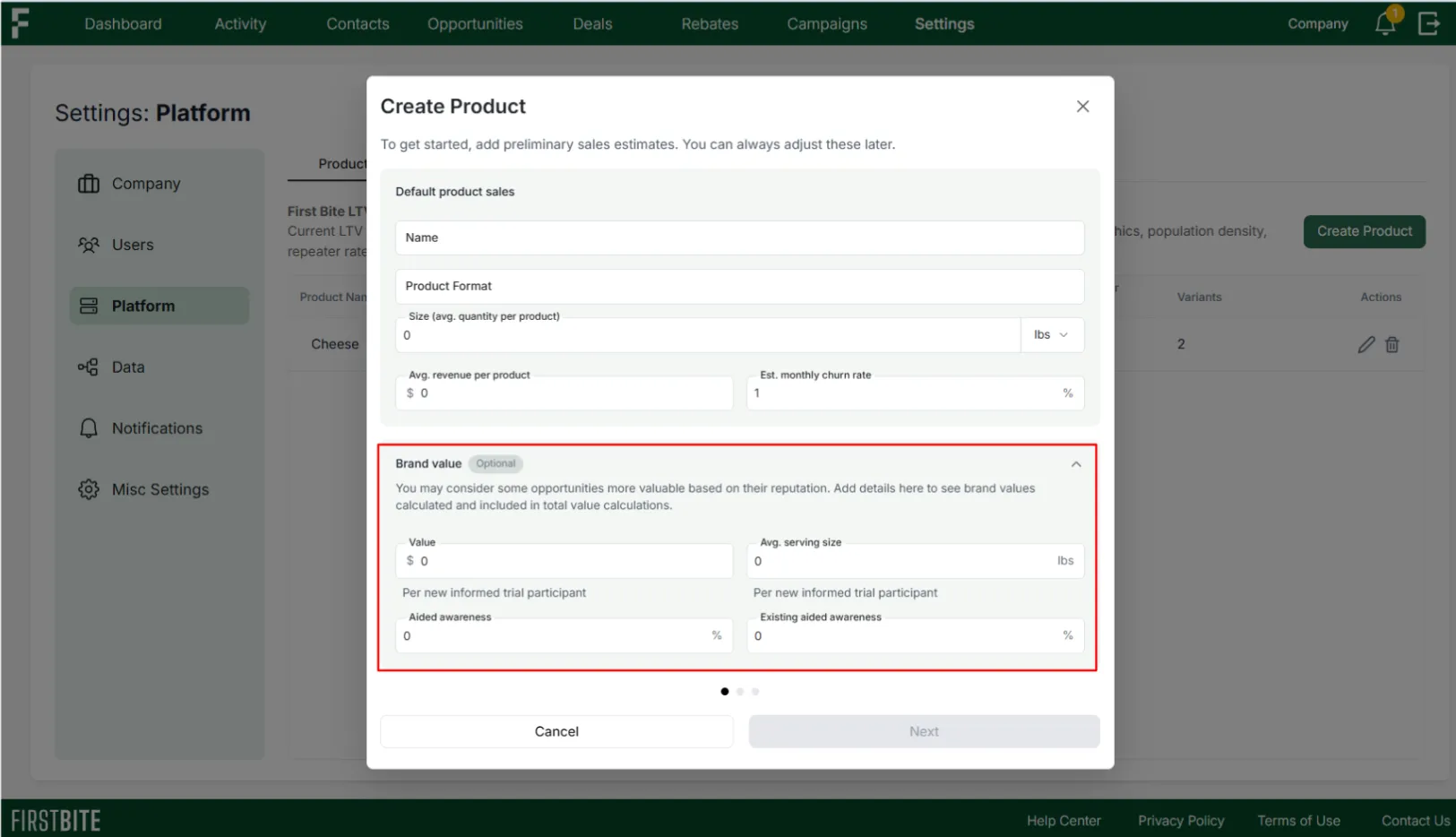
This article goes over what Brand Value is, when to apply it, what inputs are required, and how it contributes to your forecasting in First Bite. It’s especially helpful for brands focused on awareness, trial-based growth, or measuring ROI beyond revenue.
What is Brand Value?
Brand Value in First Bite is an optional forecasting input that represents the marketing value of product trial—essentially, how much your brand benefits (e.g., brand exposure, consumer awareness) when someone experiences your product in a foodservice setting (e.g., a diner trying your sauce at a restaurant).
Think of Brand Value as the amount per serving your marketing team would be willing to spend to get your product in front of a new customer—whether through an impression, a sample, or a curated trial experience.
Purpose of Brand Value
Some brands view trial as marketing—each serving is a potential touchpoint with a new customer. Brand Value helps quantify the non-revenue impact from exposure to your product. This is especially useful for emerging or growth-stage brands focused on building awareness through usage rather than paid advertising.
Why It Matters
Adds a marketing ROI lens to your sales efforts.
Helps justify placements with foodservice accounts when revenue alone may not show the full value.
Useful for brands that prioritize trial-based growth or sampling as a marketing strategy.
Brand Value: Forecasting in First Bite
Brand Value forecasting appears in First Bite as One-Year Brand Value or Lifetime Brand Value. These are separate from revenue forecasts, but visible alongside them in the Opportunities table.
One-Year Brand Value: Estimate of marketing impact over one year.
Lifetime Brand Value: Total expected brand value over the projected deal duration (adjusted by churn).
When to Use It
You're a brand-first company (e.g., Coca-Cola, Yellowbird Hot Sauce) and branding is key to your marketing strategy. It’s especially useful for emerging or consumer-focused brands.
You believe product trial = customer acquisition.
You want to model how placements influence awareness over time.
When to Skip or Leave Blank
You don’t have brand awareness data or trial value data.
You’re selling a commodity product without brand-driven growth.
You just want to focus on revenue and deal forecasting.